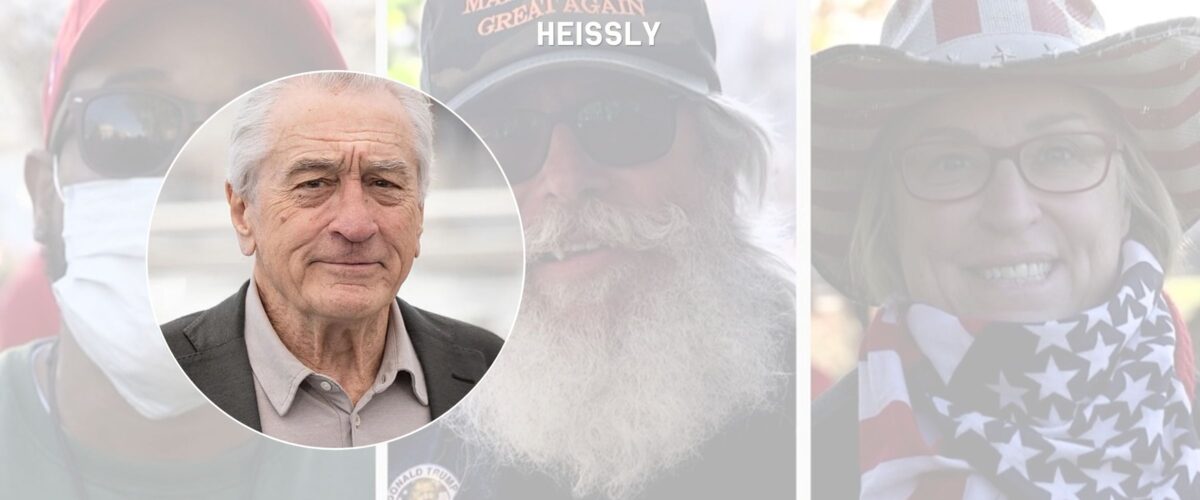
Robert De Niro Says MAGA Supporters Are “Part of a Movement That Threatens Democracy”
Introduction
Oscar-winning actor Robert De Niro has never been shy about voicing his political opinions. Over the past several years, he has emerged as one of Hollywood’s most outspoken critics of former President Donald Trump and the Make America Great Again (MAGA) movement. In his latest comments, De Niro warned that Trump’s supporters are “part of a movement that threatens democracy,” a phrase that sparked intense debate across social media and news outlets.
The remarks highlight not only De Niro’s political activism but also the ongoing national argument over the health of American democracy and the impact of populist movements.
De Niro’s Comments
De Niro’s statement came during a recent interview and echoed themes he has raised before about the dangers of authoritarianism. “MAGA supporters,” he said, “are part of a movement that threatens democracy.” While he did not elaborate on specific individuals, the actor’s words were clearly aimed at Trump’s political base and the ideology that fuels it.
This is not the first time De Niro has used sharp language to describe the former president or his movement. During Trump’s presidency he delivered fiery speeches at awards shows, rallies, and interviews. But his latest comments tie the issue directly to democratic institutions, suggesting that the stakes go beyond partisanship.
A History of Political Outspokenness
De Niro, a two-time Academy Award winner best known for films such as Taxi Driver, Raging Bull, and The Irishman, has long been considered a quintessential New York actor. In recent years he has also become a fixture at political events. He has appeared at rallies supporting Democratic candidates and spoken out on issues ranging from climate change to free speech.
In 2018, at the Tony Awards, De Niro made headlines with a profane denunciation of Trump. Since then he has continued to speak publicly about what he views as the dangers of authoritarian politics. His latest remarks about MAGA supporters build on that legacy.
Why “Threat to Democracy” Resonates
The phrase “threat to democracy” has become a common refrain among critics of Trump and the MAGA movement. They point to the events surrounding the 2020 election, including false claims of widespread voter fraud and the January 6th attack on the U.S. Capitol, as evidence that certain factions pose a danger to democratic norms.
Supporters of MAGA reject this framing. They argue that they are exercising their constitutional rights, pushing back against entrenched elites, and defending what they see as true American values. For them, accusations of being “anti-democratic” are political smears aimed at delegitimizing their movement.
De Niro’s comments tap into this larger national debate: where is the line between passionate populism and a threat to democratic institutions?
Celebrity Voices in Politics
De Niro’s remarks also revive the conversation about the role of celebrities in political discourse. Hollywood actors, musicians, and athletes have often used their platforms to speak on social and political issues—from the antiwar activism of Jane Fonda to the environmental campaigns of Leonardo DiCaprio. Yet such statements can polarize audiences.
Critics of celebrity activism argue that actors lack expertise and risk alienating fans. Supporters counter that high-profile figures can raise awareness and inspire action on issues that matter. In De Niro’s case, his blunt critiques of Trump and MAGA have made him a hero to some and a villain to others.
The MAGA Movement in Context
Make America Great Again began as Trump’s 2016 campaign slogan but quickly evolved into a political identity encompassing a broad coalition of conservative and populist voters. While it initially focused on economic nationalism, immigration control, and skepticism of global institutions, it has since become a symbol of loyalty to Trump himself.
Polls show that while MAGA remains powerful within the Republican Party, its favorability among the general electorate is more mixed. Many Americans support some of the policies associated with MAGA but reject the rhetoric, while others see it as an essential corrective to what they view as a corrupt establishment.
De Niro’s comments implicitly frame MAGA as not just a political faction but a destabilizing force in American life—a position shared by many Democratic leaders and some anti-Trump conservatives.
Responses to De Niro’s Statement
Reaction to De Niro’s “threatens democracy” comment was swift. Supporters praised him for speaking truth to power and using his platform to warn the public. Critics accused him of demonizing millions of Americans and of misunderstanding the motivations of MAGA voters.
Some political commentators noted that De Niro’s statement reflects a broader rhetorical escalation in American politics, where each side increasingly views the other not just as wrong but as dangerous to the nation’s future.
The Larger Question of Democratic Resilience
Political scientists and historians often caution that democracies can erode gradually rather than collapse suddenly. Norms such as respect for election results, an independent judiciary, and a free press can weaken over time if political actors undermine them. In that sense, De Niro’s comments echo concerns raised by scholars across the ideological spectrum.
Yet whether MAGA specifically constitutes such a threat is a matter of debate. Supporters point to Trump’s appointment of conservative judges and deregulatory policies as legitimate exercises of executive power, not authoritarianism. Opponents point to the refusal to accept election results, efforts to overturn votes, and violent rhetoric as evidence of anti-democratic tendencies.
De Niro’s intervention underscores how this academic discussion has migrated into mainstream culture, shaping how ordinary Americans think about politics.
The Impact of Celebrity Activism
It remains unclear whether celebrity statements significantly change minds. Some studies suggest that celebrities can mobilize supporters and increase turnout, especially among younger voters. Others find that partisan reactions cancel out any positive effect. In De Niro’s case, his audience is already politically aware, which may limit his ability to persuade those on the other side.
Nevertheless, such statements contribute to the national conversation and can serve as rallying cries for like-minded citizens. For Democrats and liberals concerned about the state of democracy, De Niro’s words may reinforce their sense of urgency. For conservatives, they may fuel resentment of what they see as Hollywood elitism.
Conclusion
Robert De Niro’s declaration that MAGA supporters are “part of a movement that threatens democracy” is the latest example of how deeply politics has penetrated American culture—and how cultural figures are shaping political debates. His remarks reflect a view shared by many critics of Trump that the MAGA movement represents not just an opposing ideology but a danger to the country’s democratic foundations.
Whether one agrees or disagrees, De Niro’s comments highlight the stakes of the ongoing struggle over America’s political identity. They also show that, even in an era of polarization, the words of a celebrity can still grab headlines and spark national discussion about the future of democracy itself.
